Walk the Store
A monthly ritual to keep a squad close to its own product
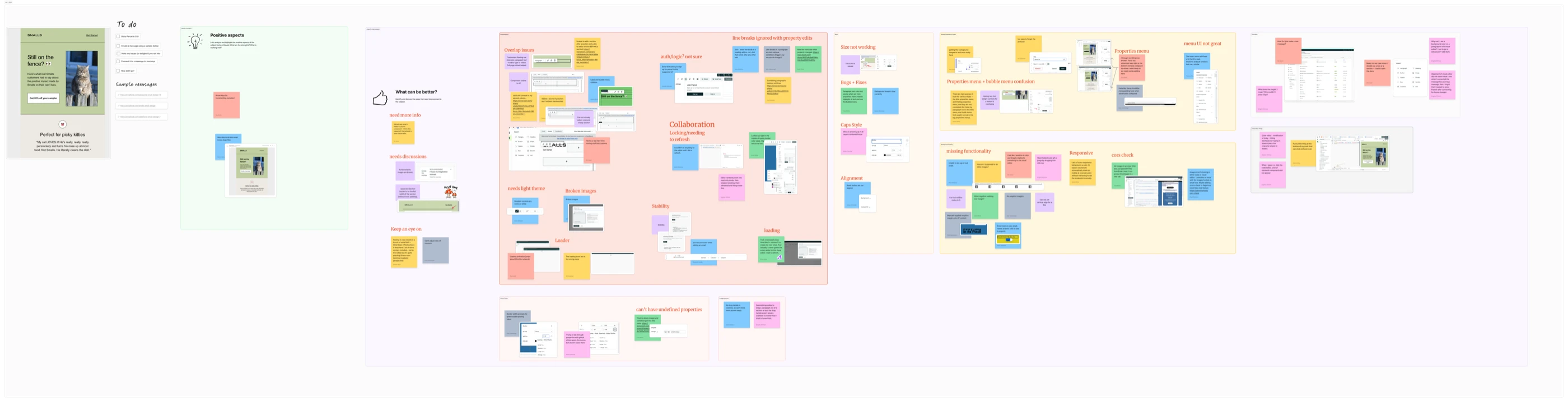
A study on rituals.
I wanted to make sure we as a squad regularly checked in as a customer. This is less a project than a habit, and it changed how our team made decisions.
The challenge
Building out Design Studio piece by piece over a long period of time, it’s easy to get detached from what the whole experience is like for users start to end. You review the thing you just made, in isolation, against the spec you just wrote. Nobody on the team was regularly sitting in the whole flow.
After listening to Katie Dill talk about their Walk the Store exercise on Lenny’s Podcast, I was inspired to do something similar on a smaller scale.
How it runs
Every month, one hour, the whole squad. The exercise is one of three things:
- Recreate a specific message end to end, the way a customer would.
- Walk a series of steps through Design Studio and the connected workflows around it.
- Watch a batch of FullStory sessions.
For thirty minutes, everyone writes notes in a shared FigJam as they go, in two columns. What’s working, so we celebrate the wins. What’s not, so we catch issues and bugs. After the activity we each talk through our notes, discuss as a squad, and prioritize fixes and features for the future.
The format matters more than it looks. One hour is short enough that nobody protests. Writing before discussing means engineers and PMs record their own observations instead of deferring to the designer. And splitting the columns keeps it from becoming a bug bash, which would have made it a chore.
What it produced
Everyone on the squad regularly looks at what we’ve produced. We’ve gained an understanding through the lens of the customer, as best we can outside of user interviews. We’ve caught and resolved issues before customers reported them.
And this is the only meeting everyone on the squad has asked we never cancel.
Why it’s here
I’ve included this because a portfolio of finished screens doesn’t show how someone works day to day. Most of what I do as a Staff designer isn’t producing artifacts, it’s building the conditions where a team notices the right things. This is the clearest small example of that I have.